Views: 0 Author: Site Editor Publish Time: 2026-10-01 Origin: Site


Household appliance reliability frequently hinges on a tiny, easily overlooked component on the printed circuit board. If this switch fails, the entire machine usually fails alongside it. Such failures quickly trigger expensive warranty claims and damage hard-earned brand reputation. Design engineers constantly battle to balance upfront component expenses against harsh real-world conditions. Appliances face daily onslaughts of moisture, lint, grease, and extreme heat. Selecting the wrong relay protection type virtually guarantees early field failures. We will explore how automated manufacturing methods and end-user environments dictate your exact component choices. You will discover an evidence-based framework to help you navigate this critical design decision. Our guide breaks down the core conflict between environmental protection and thermal efficiency. Ultimately, you will learn exactly how to specify the right relay configuration to guarantee a robust ten-to-fifteen-year product lifecycle.
Relay failure often leads directly to catastrophic appliance failure. Consider a washing machine heater relay stuck in the "ON" position. This malfunction boils the water uncontrollably, destroying the appliance and risking severe user injury. Conversely, a relay failing "OPEN" stops the heating cycle entirely. The user immediately registers the appliance as broken. You must prevent both failure modes through precise component specification.
Engineers define success by balancing several opposing requirements. You must identify a relay capable of surviving automated manufacturing stress. Wave soldering involves intense thermal shock. Aqueous washing introduces aggressive chemical solvents. After surviving assembly, the component must endure a demanding consumer lifecycle. Typical household appliances operate for ten to fifteen years. You must achieve this longevity without inflating per-unit production costs. Adding unnecessary protection features quickly erodes profit margins on high-volume production lines.
Environmental variability drastically alters your design approach. You must categorize appliances into distinct environmental classes. Dishwashers, washing machines, and HVAC systems operate in wet, harsh conditions. They face constant humidity, condensation, and chemical vapors. Ovens, microwaves, and coffee makers represent dry appliances. They operate in stable, albeit occasionally high-heat, environments. We cannot apply a universal rule for component selection across these differing categories. The specific operating environment dictates the baseline protection level required for the circuitry.
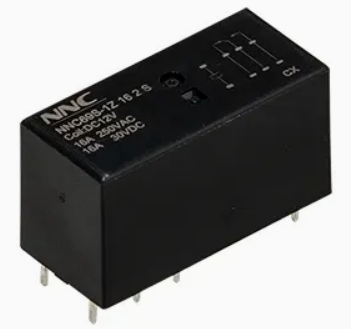
Industry standards define "sealed" devices based on their ingress protection capabilities. A typical sealed PCB relay usually carries an RT III wash-tight classification. Manufacturers seal the plastic housing using epoxy resin. This prevents liquid ingress during aggressive circuit board washing. Hermetically sealed relays represent a higher tier, utilizing glass-to-metal seals. However, appliance manufacturers rarely use hermetic designs due to prohibitive costs.
Sealed configurations provide significant manufacturing and operational advantages. They offer complete immunity to flux ingress during automated wave soldering. Liquid flux cannot penetrate the epoxy barrier and contaminate the internal contacts. Furthermore, they provide robust protection against harsh appliance environments. Sealed enclosures block humidity, airborne lint, and cooking grease. This isolation prevents contact oxidation and mechanical jamming over years of daily usage.
Despite these benefits, you must manage serious implementation risks. The most critical issue involves internally trapped emissions. Electrical arcing occurs naturally during contact switching operations. This high-energy arc generates ozone and vaporizes microscopic amounts of plastic and metal. A fully sealed enclosure traps these gases inside the housing.
Trapped emissions inevitably degrade component performance. The trapped ozone accelerates oxidation on the silver alloy contacts. Over time, carbon build-up increases contact resistance. Higher resistance generates excessive heat, ultimately welding the contacts together or destroying the plastic housing. You can mitigate this risk by "knocking off the nib." Manufacturers mold a tiny plastic peg on the relay cover. After the factory washing process concludes, workers physically break off this nib. This simple action vents the enclosure, allowing harmful gases to escape while regaining thermal equilibrium.
Unsealed configurations encompass two primary industry classifications. RT I devices are dust-protected but offer minimal defense against liquids or vapors. RT II devices are flux-proof. They feature a basic sealant around the base terminals. This sealant prevents vaporized flux from wicking upward into the housing during wave soldering. However, RT II devices cannot withstand liquid immersion or aggressive post-solder washing.
These simpler designs deliver unique performance advantages. They allow immediate outgassing from electrical arcing. Harmful ozone and carbon vapors escape freely into the surrounding atmosphere. This ventilation preserves contact integrity and extends electrical lifespan. Additionally, unsealed housings offer superior heat dissipation. Heat moves easily from the internal contacts to the external air. This thermal efficiency is crucial for switching high-current appliance loads, such as refrigerator compressor motors.
Unsealed devices also lower your baseline Bill of Materials (BOM) costs. They require less epoxy and fewer manufacturing steps than their wash-tight counterparts. When multiplied across millions of production units, these savings become highly significant.
However, you face distinct implementation risks. Unsealed relays remain highly vulnerable to flux contamination. If your factory struggles to control wave soldering parameters, flux vapors will penetrate the housing. Condensed flux physically coats the contacts, causing immediate electrical failure. Furthermore, unsealed devices are strictly unsuitable for certain assembly processes. You cannot use them on boards requiring aqueous washing. You also cannot apply liquid conformal coating over the board, as capillary action will pull the coating directly into the internal mechanism.
| Component Characteristic | RT I / RT II (Unsealed) | RT III (Wash-Tight) |
|---|---|---|
| Thermal Dissipation | Excellent | Poor to Moderate |
| Outgassing Capability | Continuous | Requires manual venting |
| Flux Ingress Immunity | Vulnerable (RT I) / Moderate (RT II) | Complete Immunity |
| Manufacturing Cost | Baseline | Premium |
Your factory's assembly line capabilities dictate your primary constraints. If your production relies on wave soldering followed immediately by a water or chemical wash, you have little choice. You must select an RT III wash-tight component. The water pressure and solvents will instantly ruin any lesser classification. You can only bypass this rule by hand-soldering the relay after the automated washing phase concludes.
Conversely, many modern factories employ a "no-clean" flux process. This method eliminates the post-solder washing stage entirely. Under these specific conditions, evaluating a sealed vs unsealed PCB relay becomes much easier. An unsealed or flux-proof RT II model becomes a highly viable, cost-effective option.
The electrical load characteristics heavily influence your thermal strategy. Appliances driving high-inrush loads, like compressors or pump motors, create significant electrical arcing. This arcing generates immense localized heat and expanding gases. Unsealed relays dissipate the resulting thermal energy far better than closed systems. They maintain a lower operating temperature, which prevents plastic deformation.
Low-current signal loads require a completely different approach. These circuits switch very small amounts of current, often for microcontroller feedback. They lack the electrical energy required to "burn through" surface contamination. If you place unsealed relays in dusty or greasy environments, a micro-film will quickly form on the contacts. This film causes signal loss. In these scenarios, a sealed enclosure provides necessary isolation.
You must map the component to the appliance's final destination. High-humidity environments heavily favor sealed protection. Washing machines, dishwashers, and outdoor HVAC units experience constant condensation. Water vapor easily permeates unsealed housings. This moisture causes rapid coil corrosion and contact oxidation. You must seal the circuitry to ensure long-term functionality.
High ambient heat environments demand maximum ventilation. Ovens, dryers, and commercial toasters generate extreme internal temperatures. If you use a sealed enclosure here, the internal air expands dramatically. The trapped heat pushes the component housing past its structural thermal limits. Venting the housing prevents mechanical distortion and ensures reliable armature movement.
Regulatory frameworks provide strict guardrails for appliance designers. Safety agencies do not allow arbitrary component selection. You must adhere to standards like UL 508 for industrial control equipment and UL 60947-4-1 for motor controllers. More importantly, IEC 60335-1 governs safety requirements for unattended household appliances. Smart washing machines and robotic vacuum cleaners fall under this specific category.
IEC 60335-1 mandates rigorous Glow Wire testing. This test ensures the plastic materials do not ignite or propagate flames during electrical faults. The plastic housing material must pass these flammability requirements regardless of the seal type. When specifying a sealed PCB relay, verify the manufacturer utilizes Glow Wire compliant resins.
Vendor evaluation requires strict attention to testing data. You must demand empirical proof from your manufacturing partners. Request comprehensive life-cycle test data for components operating under your specific load profiles. Do not accept generic resistive load data if you are switching an inductive motor load.
You should initiate several critical next-step actions to secure your supply chain. Follow this structured approach:
Your component selection directly impacts appliance reliability, safety, and brand perception. We have established that sealed relays represent a non-negotiable manufacturing necessity for wash-heavy assembly lines and wet-environment appliances. They offer unparalleled defense against liquid intrusion and factory solvents. However, unsealed relays emerge as the long-term reliability champion for switching high-current loads in dry environments. Their superior heat dissipation and natural outgassing capabilities prevent premature contact degradation.
Always align your specification tightly with your factory’s specific soldering and washing capabilities first. Only after securing manufacturing compatibility should you optimize for the consumer’s kitchen or laundry environment.
A: No. The coating will wick into the relay mechanism, seizing the armature or coating the contacts. A sealed relay is strictly required.
A: RT II prevents flux vapors from entering via the base during soldering but cannot withstand liquid washing. RT III is fully sealed against liquid immersion during the PCB wash process.
A: Not necessarily. While protected from external contaminants, trapped internal gases from electrical arcing can actually reduce the electrical lifespan of a sealed relay compared to a vented one under heavy loads.

 注: 建议图片大小150px*50px


