Views: 126 Author: Site Editor Publish Time: 2026-07-21 Origin: Site


Modern electronics constantly push the extreme limits of component miniaturization. You face a tough tension every day in design. You must shrink overall device footprints significantly. At the same time, you demand uncompromising electrical reliability from every part. Every single millimeter counts inside a compact housing. You simply cannot sacrifice functional performance to save space.
Poor component selection brings severe engineering risks. Premature internal wear and inconsistent actuation often lead to catastrophic system breakdowns. These unexpected hardware failures trigger highly publicized product recalls. They instantly damage long-term brand trust. Your choice of internal switching logic dictates the survival of the host device.
This guide provides a structured engineering and procurement framework. It helps you evaluate components accurately. You will learn how to specify the exact switch for high-stakes, space-constrained applications. We explore critical mechanical integration methods and electrical load ratings. You will understand how environmental sealing protects performance. Finally, we teach you how to assess vendor compliance effectively.
Actuator style must dictate mechanical integration; mismatched levers lead to overtravel failure.
Electrical ratings do not scale linearly with size; verify precise load parameters against switch capabilities.
Operating force requirements determine tactile feedback and reliability in sensitive applications.
Environmental sealing (IP ratings) is non-negotiable for devices exposed to dust, moisture, or extreme temperatures.
Vendor selection should prioritize transparent compliance (UL/ENEC) and consistent manufacturing tolerances.
Modern electronics face extreme spatial limitations across multiple industries. You see this dense packaging reality in advanced automotive control modules. Handheld medical devices also require incredibly tight component spacing. Smart home touch panels cram complex networking hardware into shallow wall cavities. You must fit reliable switching logic into these shrinking physical boundaries. The physical enclosure leaves almost zero room for error during mechanical integration.
What does a successful component integration look like? A successful design delivers a highly predictable lifecycle. It provides a consistent tactile response under varying environmental conditions. You achieve absolutely zero false triggers during active operation. The mechanical actuator engages predictably every single time. Users feel a distinct, reliable click confirming their input. The electrical circuit closes smoothly without dangerous signal hesitation.
We must clearly define the physical dimensions of these components. A true subminiature micro switch is significantly smaller than a basic miniature alternative. Standard miniature switches often measure around 27mm in overall length. Subminiature variants shrink this footprint down to 12.8mm or less. They utilize much tighter pitch spacing for printed circuit board mounting. This aggressive reduction in size demands extreme precision in manufacturing.
You face a strict, unavoidable trade-off matrix during specification. You must perfectly balance physical size against current-carrying capacity. A smaller internal contact gap inherently limits high-current handling. Less physical metal means less ability to dissipate thermal energy. This spatial reality also reduces overall mechanical lifespan. You must weigh these exact three factors before finalizing any dense circuit layout.
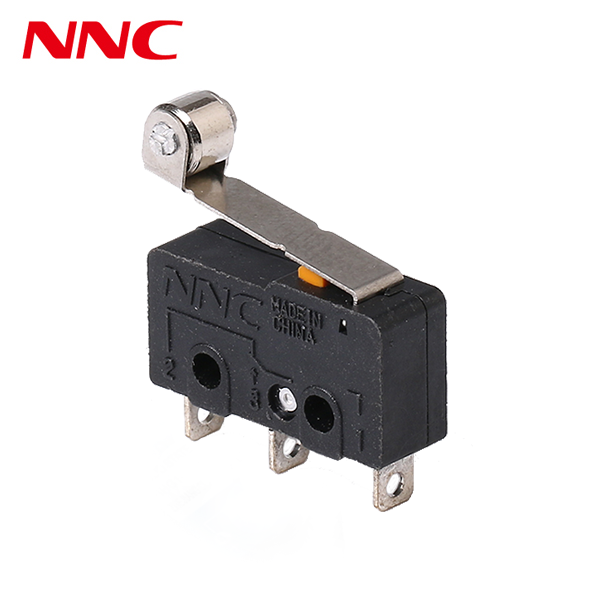
Actuator geometry dictates your entire mechanical integration strategy. You cannot force a mismatched lever into a tight device cavity. Pin plungers work best for direct, inline actuation sequences. They demand precise vertical alignments from the host device. You must actively avoid side-loading a pin plunger mechanism. Lateral pushing forces will permanently damage the delicate internal plastic housing.
Angled or sweeping actuation paths require a completely different approach. You should specify a hinge micro switch for these curved geometric scenarios. Hinge levers offer a distinct mechanical advantage for the driving component. They multiply the incoming actuation force and extend the usable travel distance. You will find significant variance in available lever lengths and curvature profiles.
Cam-driven applications rely heavily on specialized roller levers. You also need them for rapidly sliding mechanical tracks. The rotating roller wheel dramatically minimizes surface friction during engagement. This rotational movement prevents premature wear on both the switch lever and the driving cam. It ensures smooth force transfer across thousands of rapid cycles.
Internal mechanics define the true switching speed and safety. A well-designed fast action micro switch relies on a precision over-center spring. This internal tension mechanism ensures rapid contact transfer. It moves the stationary contacts instantly, regardless of your external pressing speed. This rapid separation actively prevents sustained electrical arcing across the microscopic gap.
Actuator Mechanism | Primary Kinematic Path | Ideal Application Scenario | Integration Restriction |
|---|---|---|---|
Pin Plunger | Strictly Vertical / Inline | Push-button arrays, direct lid closures | Extremely sensitive to destructive side-loading |
Hinge Lever | Radial / Sweeping | Door latches, angled trigger grips | Requires calculation of extended travel paths |
Roller Lever | Sliding / Cam-driven | Motor cams, linear actuator tracks | Adds vertical height to the overall footprint |
You must rigorously differentiate between mechanical and electrical lifespans. The mechanical durability of the internal tension spring usually spans millions of physical cycles. However, the electrical lifecycle drops significantly when placed under an active load. High voltages and heavy inrush currents erode the internal metal contacts rapidly. Always evaluate the electrical rating curve provided by the engineering datasheet.
Operating force directly impacts tactile user feedback and system reliability. We measure this required push force strictly in grams or Newtons. A lightweight fluid level sensor requires a sensitive micro switch to operate correctly. Heavy industrial equipment requires a much higher-force variant instead. Stiffer internal springs naturally resist accidental false triggers caused by intense machine vibration.
Environmental protection requires careful, application-specific evaluation. Many field applications demand IP67-rated sealed switches. Dust and moisture will destroy exposed metal contacts in days. However, internal sealing boots introduce notable structural trade-offs. The rubber seal slightly dampens the crisp tactile feedback. It also measurably increases the required operating force. You must account for this resistance shift.
Contact materials determine your absolute switching capability. Consider these distinct material options carefully for any compact micro switch:
Gold cross-point contacts: Ideal for micro-load circuits and logic-level signaling. They naturally resist surface oxidation in low-power environments.
Solid silver contacts: Best suited for standard power switching applications. They conduct electricity efficiently but remain susceptible to gradual sulfidation.
Silver-alloy variations: Designed specifically for high-inrush loads. They handle localized arcing and higher internal temperatures effectively during rapid toggling.
Host device manufacturing inherently introduces cumulative spatial tolerances. We call this phenomenon a geometric tolerance stack-up. It poses a massive risk to reliable switching mechanics. Poorly molded plastic housings can lead to insufficient lever travel. Worse, they can drive the actuator deep into destructive overtravel. You must calculate these dimensional variances meticulously during the CAD phase.
Industrial soldering exposes subminiature plastics to severe thermal risks. Automated wave soldering and manual hand soldering generate intense, localized heat. This thermal shock easily warps thin plastic switch enclosures. We highly recommend adopting strict thermal management practices on the assembly line. Consider specifying pre-wired harnesses or specialized plug-in terminals to bypass direct PCB heating entirely.
Real-world environmental degradation destroys components silently over time. Surrounding adhesives and potting compounds often release volatile organic gases. This outgassing coats the open switch contacts in an invisible insulating film. Continuous mechanical vibration induces severe electrical contact bounce. Extreme temperature cycling progressively degrades the baseline tension of the internal snap spring.
You need a rigorous, proactive avoidance strategy. We recommend executing a strict mechanical testing checklist before you commit to mass production.
Run comprehensive prototype validations to verify exact actuator kinematics.
Perform aggressive thermal shock testing to expose hidden material weaknesses.
Analyze surrounding chemical components for potential long-term outgassing risks.
Confirm your mechanical overtravel limits remain safe under peak operating loads.
Global regulatory compliance forms the absolute foundation of hardware trust. You cannot specify an unverified control device switch for critical industrial infrastructure. You must explicitly demand globally recognized testing certifications. Look for transparent UL, ENEC, and CQC performance ratings. Verify complete component adherence to strict RoHS and REACH chemical material standards.
Standardized catalog parts do not always solve complex spatial design problems. You must carefully evaluate when to utilize basic off-the-shelf components. Sometimes, an aggressive application requires a custom waterproof wire harness. You might need specialized lever geometries or highly customized force profiles. Engaging the manufacturer for direct custom modifications often saves significant downstream assembly costs.
Supply chain resilience dictates your ultimate production success. Assess a component manufacturer's automated production capabilities directly. High factory automation ensures tight geometric consistency in batch-to-batch tolerances. You must also evaluate their historical lead times and raw material sourcing. Supply bottlenecks can easily derail major global product launches.
Take decisive, action-oriented next steps in your procurement journey. Advise your mechanical engineering teams to request detailed 3D CAD models immediately. Secure physical product samples for early, hands-on prototyping. Initiate direct technical dialogues with the vendor's internal engineering teams. They understand the nuanced limits of their internal tension mechanisms better than anyone.
Selecting the right subminiature switch remains a rigorous engineering exercise. You must perfectly balance mechanical lever geometry, electrical load limits, and harsh environmental realities. A simple miscalculation in operating force or spatial tolerance easily compromises the entire host device.
Rigorous upfront evaluation directly prevents incredibly costly downstream failures. You actively protect your brand reputation by testing kinematics and thermal limits early in the design cycle. Relying on verified certifications ensures long-term operational safety across global markets.
Take control of your component specification process today. Download a comprehensive component selection checklist to align your engineering parameters. Request a dedicated engineering consultation with your trusted manufacturing partner. Order a complete physical sample kit to begin your hands-on evaluation immediately.
A: The primary difference lies in their standardized physical dimensions and terminal pitch. A standard miniature switch typically measures around 27mm in length. A subminiature micro switch shrinks this footprint to 12.8mm or smaller. Subminiature versions utilize tighter pin spacing, making them ideal for highly dense printed circuit boards.
A: Operating force directly correlates with the internal spring tension. Higher operating forces utilize stiffer internal springs. These stiff springs provide higher contact pressure, which naturally resists machine vibration and reduces electrical arcing. However, excessively high force can accelerate mechanical fatigue on the lever hinge over millions of cycles.
A: Subminiature switches inherently face physical limitations due to their tiny contact gaps. Most standard versions safely handle between 0.1A and 5A depending on the voltage. Handling sustained high currents generates excessive heat that melts small plastic enclosures. For heavy power loads, you must trigger an external power relay instead.
A: No. Most sealed micro switches carry an IP67 rating. This rating protects against dust ingress and temporary water immersion up to 1 meter for 30 minutes. It does not guarantee survival under continuous deep-water submersion. For permanent underwater applications, you must specify specialized IP68-rated enclosures and customized sealing methods.

 注: 建议图片大小150px*50px


