Views: 120 Author: Site Editor Publish Time: 2026-02-24 Origin: Site


Micro switches, also known as snap-action switches, are a crucial component in many electronic and industrial applications. Despite their small size, these switches are vital for accurate and reliable control in a variety of devices, from household appliances to complex industrial machines. In this article, we will explore what a micro switch is, how it works, the different types available, and their applications across various industries.
A micro switch is a type of electromechanical switch that operates with a very small physical force. These switches are designed to open or close a circuit quickly when a mechanical force is applied to them. They are called "micro" because they require a very small amount of movement to trigger the switch.
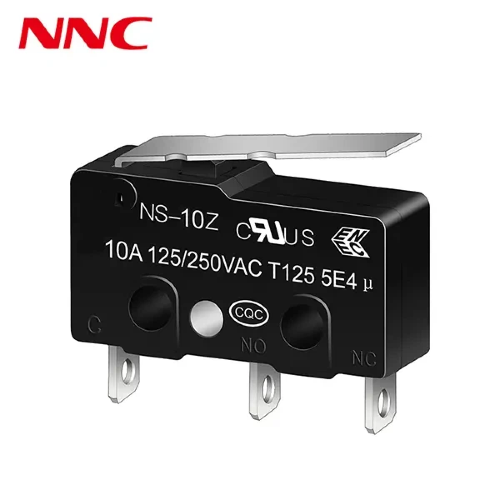
A micro switch consists of an actuator (the part that is moved to trigger the switch), a set of contacts that open or close when the actuator is triggered, and a spring that returns the actuator to its original position after the switch is activated.
Micro switches are known for their reliability, speed, and accuracy, making them ideal for precise switching operations.
Actuator: The part of the switch that gets pressed, pulled, or pushed to trigger the switch’s action. It could be a lever, button, or plunger.
Contacts: The conductive parts that open or close the circuit when the actuator is triggered.
Housing: The external casing that protects the internal components of the switch.
Spring: A mechanism that ensures the actuator returns to its original position after the switch is triggered.
Understanding the working principle of a micro switch is key to appreciating its reliability and efficiency. Micro switches operate on a snap-action mechanism, which means that the internal contacts move from one position to another very quickly and without hesitation. This quick movement ensures that the switch responds reliably and accurately every time it is triggered.
The snap-action mechanism is the heart of how a micro switch works. When an external force is applied to the actuator (such as pressing a lever), the spring-loaded contacts inside the switch snap open or closed. This fast action prevents the switch from staying in an intermediate state, ensuring a sharp and reliable on/off response.
This mechanism is crucial for ensuring that the micro switch can handle high-speed operations, like those needed in industrial and automotive applications.
Fast Response Time: The snap-action mechanism ensures that the switch responds almost instantaneously when activated.
High Reliability: The quick movement prevents the contacts from sticking or failing to make contact, ensuring a long lifespan.
Minimal Force Required: The switch operates with very little force, making it ideal for applications where precise control is needed.
Micro switches come in different shapes and sizes, with varying features depending on their intended application. Understanding the different types can help you select the right switch for your needs.
Type | Description | Best Used For |
Basic Micro Switch | Standard micro switch with a lever actuator. It provides reliable snap-action switching for general purposes. | General-purpose applications such as household appliances. |
Roller Micro Switch | Features a roller on the actuator for smoother operation, reducing wear and tear. | Applications with repetitive movements like conveyor belts. |
Subminiature Micro Switch | A compact version of the standard micro switch. Perfect for applications with limited space. | Consumer electronics and small equipment. |
Sealed Micro Switch | Designed to be resistant to water, dust, and other environmental factors. | Harsh environments such as outdoor machinery or industrial sites. |
High-Current Micro Switch | Capable of handling higher currents compared to standard micro switches. | High-power applications like automotive and heavy machinery. |
Actuation Mechanism: Simple lever or plunger.
Durability: Standard durability with an expected lifespan of several million operations.
Applications: Commonly used in household appliances like microwaves, toasters, and light switches.
Actuation Mechanism: Roller lever mechanism that reduces friction.
Durability: High reliability in systems with moving parts.
Applications: Ideal for conveyor systems, elevators, and automation machines where frequent movement is involved.
Actuation Mechanism: Compact actuator with smaller dimensions.
Durability: Shorter lifespan compared to regular micro switches but still reliable for its size.
Applications: Used in compact electronic devices like cameras, handheld gadgets, and medical equipment.
Actuation Mechanism: Sealed design to prevent dirt, dust, and water ingress.
Durability: Extra protection against environmental factors, ensuring longer life in challenging conditions.
Applications: Outdoor industrial equipment, automotive systems, and marine applications.
Micro switches are incredibly versatile and are used in a variety of industries due to their reliability and small size. Here are some of the most common sectors where they are applied:
Industry | Application | Micro Switch Role |
Industrial Automation | Used to detect positions in machines, prevent overloads, and in safety interlocks. | Position detection, safety cut-off, and limit switches. |
Automotive | Found in car door sensors, seatbelt sensors, and safety mechanisms like airbags. | Detection of vehicle conditions (e.g., open doors, seatbelt). |
Consumer Electronics | In appliances like microwaves, thermostats, and vending machines. | Control circuits in household and office equipment. |
Medical Equipment | Used in medical devices like infusion pumps, alarms, and diagnostic equipment. | Precision control and safety features in medical applications. |
Home Appliances | Essential in appliances such as washing machines, air conditioners, and electric fans. | Activation and safety control for household items. |
Micro switches are integral to industrial automation systems, where they are used to detect the position of parts and ensure that machines operate safely and efficiently. They are commonly used in systems like conveyors, robotic arms, and industrial presses.
In the automotive industry, micro switches are used for critical safety applications such as seatbelt reminder systems, door lock sensors, and gear shift indicators. Their quick response and reliability make them perfect for use in automotive safety systems.
Micro switches are found in various consumer electronics, such as remote controls, household appliances, and gaming controllers. Their compact size and fast switching capabilities allow for seamless operation in these devices.
Micro switches are used in medical devices where precise control is crucial. For instance, in infusion pumps, a micro switch might be used to detect fluid levels, ensuring that the device functions correctly and safely.
High Reliability
Micro switches are designed to last for millions of operations, making them one of the most reliable switching components available.
Fast Response Time
The snap-action mechanism ensures that the switch responds in an instant, making it ideal for high-speed applications.
Compact Design
Micro switches are available in compact sizes, making them suitable for applications with limited space.
Long Lifespan
Due to their simple mechanical design, micro switches have a long operational lifespan, often reaching several million cycles.
When selecting a micro switch, it's essential to consider several factors to ensure that the switch suits your specific needs. Here are the key considerations:
Consideration | What to Look For | Why It's Important |
Actuation Force | Choose the force needed to activate the switch. | Ensures the switch meets the sensitivity requirements. |
Current Rating | Determine the voltage and current the switch will handle. | Make sure the switch can manage the electrical load. |
Environmental Protection | Look for sealed switches if the device is exposed to harsh conditions. | Protects the switch from dust, moisture, and chemicals. |
Size and Mounting | Check the size and mounting type (e.g., surface-mount, through-hole). | Ensure the switch fits within your design constraints. |
Micro switches are vital components in a wide range of industries, offering unmatched reliability, precision, and long-lasting performance. Whether you require them for household appliances, automotive systems, or industrial automation, micro switches deliver a fast and efficient solution to meet your switching needs. At Clion Electric Co., Ltd., we specialize in providing high-quality micro switches designed to ensure optimal performance in various applications. Our extensive product range is built to handle different requirements, from compact designs for consumer electronics to durable options for harsh industrial environments. Choosing the right micro switch is crucial to ensuring the longevity and efficiency of your devices and systems. If you're looking for reliable solutions, we invite you to explore our products and get in touch with our team for personalized recommendations. Let us help you find the perfect micro switch tailored to your specific needs.
Micro switches use a snap-action mechanism that provides a fast, reliable on/off response with minimal physical force, whereas regular switches may require continuous pressure or movement to activate.
Micro switches are designed to last for millions of cycles, making them incredibly durable, especially when used in industrial or high-frequency applications.
Yes, certain types of micro switches are designed to handle high currents and voltages, making them suitable for automotive and industrial applications.
Some micro switches are sealed and rated for use in wet or dusty environments. Check the product specifications for waterproof or sealed ratings.
Micro switches are designed to withstand vibrations, making them ideal for use in automotive and industrial environments where vibration is common.

 注: 建议图片大小150px*50px


