Views: 135 Author: Site Editor Publish Time: 2026-10-10 Origin: Site


Original Equipment Manufacturers (OEMs) face a constant struggle during procurement. They must balance cash flow against manufacturing continuity. High Minimum Order Quantities (MOQ) tie up vital capital in warehouse stock. However, extended lead times threaten to halt entire assembly lines. Electronic component supply chains remain inherently volatile today. A missing component stops production completely. We often see this happen when procurement teams mismanage critical path items. You need a structured approach to resolve this tension effectively. Analyzing requirements accurately prevents unnecessary delays. Negotiating smarter supplier terms provides flexibility. Implementing modern inventory strategies mitigates risk. You can achieve all this while protecting company margins. This guide explores exactly how to navigate this delicate balance.
Accurate demand forecasting and safety stock calculations are non-negotiable prerequisites for balancing MOQ and lead time.
Aligning your procurement strategy with standard general purpose power relay specifications drastically reduces manufacturing lead times compared to custom configurations.
Evaluating a general purpose power relay supplier requires looking beyond piece-price to assess their raw material buffer and production capacity.
Strategic contracting (e.g., blanket POs, Vendor-Managed Inventory) allows OEMs to secure low-volume, just-in-time deliveries while satisfying the manufacturer's annual MOQ requirements.
Procurement teams often face a direct inverse relationship between order volume and delivery speed. Suppliers routinely offer shorter lead times for high MOQ commitments. They prioritize massive production runs for factory efficiency. Conversely, low MOQ requests often trigger secondary production queues. Manufacturers push smaller orders to the back of the line. You then experience significantly longer wait times. This dynamic creates a difficult paradox for buyers. Finding the middle ground requires strategic planning and proactive supply chain management.
Failing to address this tension brings severe hidden costs. Accepting excessive MOQs leads to exorbitant inventory holding expenses. Warehousing surplus components drains cash reserves quickly. Capital tied up in stagnant inventory cannot fund innovation. On the flip side, delayed deliveries cause catastrophic line-down occurrences. Assembly plants sitting idle waste thousands of dollars per hour. You also face expedited shipping premiums to rush delayed parts via air freight. Neither extreme offers a sustainable business model for modern manufacturing operations.
A successful procurement plan achieves a lean inventory turn ratio. It does so without compromising OEM production schedules. You want components arriving precisely when assembly requires them. Buyers must secure favorable delivery windows regardless of immediate order size. This requires shifting from transactional purchasing to collaborative supply chain management. We consider success achieved when production hums along uninterrupted while warehouse shelves remain unburdened by excess stock.
Deviating from industry standards creates massive procurement bottlenecks. Custom configurations exponentially increase both MOQ and delivery times. Manufacturers must retool assembly lines for custom requests. They also source specialized raw materials for these unique designs. To avoid this, strictly align your choices to standard general purpose power relay specifications. Standardized components sit in active production constantly. This active flow guarantees lower minimum thresholds and faster dispatch globally.
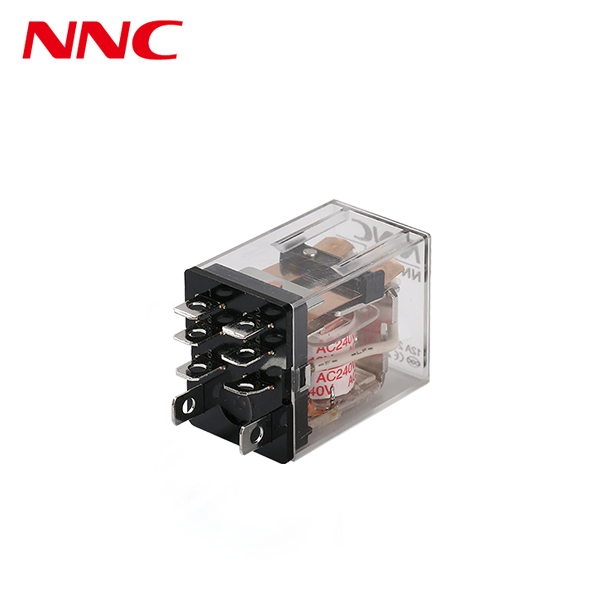
Specific configurations deeply impact manufacturing complexity. For instance, choosing a single coil general purpose power relay streamlines batch sizing. Manufacturers produce single coil variants in massive, continuous volumes for industrial applications like HVAC and motor controls. Latching variants require more intricate assembly steps. They often sit in slower production queues awaiting specialized technicians. Availability of raw materials like silver alloy contacts matters heavily. Using a standard power relay improves predictability across the board. You eliminate the risk of niche material shortages holding up your critical order.
Engineering and procurement teams must align early in the design phase. We recommend regular cross-functional reviews before finalizing the Bill of Materials (BOM). Engineers sometimes select overly complex components unnecessarily to over-engineer a solution. Procurement must step in to suggest widely available alternatives. Standardizing parts across multiple product lines yields much better purchasing leverage. You can combine the volume of three different projects into one larger order. This unified approach lowers the overall MOQ burden on the company.
Blanket Purchase Orders (BPOs) offer an excellent workaround for strict volume requirements. You negotiate annual volume commitments to satisfy supplier MOQ constraints upfront. However, you schedule staggered, low-volume monthly deliveries throughout the year. This strategy keeps OEM inventory levels incredibly lean. You only pay for components as they arrive at your dock. The manufacturer benefits from guaranteed long-term revenue and factory planning predictability. Both parties win through this highly structured arrangement.
Vendor-Managed Inventory (VMI) further decouples manufacturing speed from delivery speed. You require suppliers or distributors to hold safety stock locally. They typically maintain a 30 to 60-day buffer on their shelves near your facility. You pull from this buffer exactly when assembly requires parts. This stocking agreement completely nullifies factory lead times. The general purpose power relay arrives at your facility in days, not weeks. ERP system integration ensures the supplier monitors inventory dips automatically.
Achieving this requires absolute forecasting transparency. You must share rolling 6-to-12-month demand forecasts regularly. Suppliers use this data to pre-position raw materials like copper wire and plastics. They cannot build flexibility into their schedules blindly. Open communication builds trust and ensures material readiness before you even place the final release order.
Dual-sourcing presents another critical reality to consider. Validating a secondary supplier mitigates severe risk during global component shortages. However, splitting your total volume makes reaching MOQ thresholds harder. You must weigh the safety of redundancy against the loss of volume discounts. Often, a primary-secondary split of 80/20 maintains leverage while providing an emergency backup.
Procurement Strategy Comparison
Strategy | Impact on MOQ | Impact on Lead Time | Best Use Case |
|---|---|---|---|
Blanket Purchase Orders (BPO) | Satisfies annual requirements easily | Reduces monthly wait times significantly | Predictable, long-term OEM production |
Vendor-Managed Inventory (VMI) | Transfers holding burden to the supplier | Provides immediate, just-in-time delivery | Critical path components prone to shortages |
Spot Market Purchasing | Avoids strict factory MOQ entirely | Highly variable, often unpredictable | Emergency shortages and prototyping only |
Evaluating potential partners requires looking far beyond the piece-price on the quote. You must assess supply chain transparency thoroughly during the audit phase. Does the general purpose power relay supplier control their own coil winding? Do they manage their own contact stamping internally? Relying heavily on sub-tier vendors introduces hidden delays. A vertically integrated manufacturer adapts to schedule changes much faster. They control the entire raw material pipeline from start to finish.
Capacity and agility separate adequate vendors from exceptional ones. Request the supplier's standard lead time matrix for extensive review. Ask about their expedited production capabilities during unexpected emergencies. Investigate their internal policy regarding mixed-model scheduling. Flexible factories can slip smaller urgent orders between massive production runs. Rigid factories will force you to wait for the next open calendar cycle.
Compliance and quality consistency ensure your assembly line never stops due to defects. You should always verify active ISO 9001 certifications. Request detailed environmental and load testing schedules. Demand historical on-time delivery (OTD) rates for the past eight quarters. A reliable vendor provides verifiable OTD data quickly. They do not rely on vague promises or marketing jargon.
Create a weighted shortlisting logic matrix to make objective decisions. Follow these structured steps during evaluation:
Assign high scoring weight to flexible delivery terms like BPO acceptance.
Score vendors based on their active raw material buffer capacity.
Evaluate historical OTD metrics rigorously against industry averages.
Penalize vendors offering low unit prices but rigid, high-MOQ rules.
Conduct a final audit of their internal manufacturing and testing capabilities.
Procurement teams often fall into the "spot market" trap during crises. Independent brokers offer immediate stock to bypass factory MOQs entirely. This path carries immense hidden dangers for critical electronics. You face high risks of receiving counterfeit or substandard components. Brokers rarely provide valid manufacturer warranties for their stock. You also lose consistent lot traceability for quality control. Using unverified parts jeopardizes your entire end product and company reputation.
Ignoring transit times completely destroys well-planned production schedules. Buyers frequently calculate lead time based solely on ex-works (EXW) dates. EXW only means the goods finished production at the factory floor. It ignores the long journey to your final warehouse. You must factor in customs clearance delays and documentation checks. Port congestion adds weeks to international maritime shipments. Freight forwarding variables change constantly based on global events. Always plan based on Delivered Duty Paid (DDP) or final arrival dates.
Over-optimistic buffer assumptions cause frequent factory line stoppages. Running safety stock too lean seems highly efficient during normal times. It becomes disastrous during macro-economic component shortages. A small disruption in copper mining ripples through the whole market rapidly. We strongly recommend dynamic safety stock adjustments. Recalculate your buffer requirements quarterly based on global market health instead of relying on static, outdated formulas.
Successful inventory planning requires standardizing your baseline specifications first. It also demands treating the supplier as a strategic scheduling partner. They are not merely a transactional vendor. You build long-term resilience by aligning your engineering choices with actual market realities. Navigating MOQ restrictions becomes much simpler when standard components drive your BOM.
Your procurement team should audit their current BOMs immediately. Consolidate overlapping part numbers where possible to pool your purchasing volume. Standardize components to increase your overall negotiating leverage. Finally, initiate BPO and VMI discussions with verified manufacturers to secure your supply chain moving forward.
A: Typical lead times range from 4 to 12 weeks. This heavily depends on whether the specification is standard or custom. Standard relays utilize stocked raw materials for faster turnaround. Current global copper and silver market conditions also heavily influence these factory lead times.
A: Offer a blanket purchase order (BPO) with scheduled monthly releases. You can also pay a slight premium per unit for smaller batches. Additionally, standardizing your designs to utilize a relay the supplier already produces in high volume naturally lowers the required MOQ.
A: Yes. Single coil designs are ubiquitous in industrial and commercial applications. Because of this, they generally benefit from much higher continuous production volumes. This results in more favorable MOQs and shorter manufacturing lead times compared to specialized dual-coil latching relays.

 注: 建议图片大小150px*50px


