Views: 147 Author: Site Editor Publish Time: 2026-09-06 Origin: Site


Designing industrial or consumer equipment for harsh environments demands precise component selection. Unexpected hardware failures often stem from overlooked environmental factors at the component level. A single compromised switch can easily trigger system-wide breakdowns, escalate warranty claims, and introduce serious safety hazards. The functional lifespan and environmental resilience of these components rely entirely on their metallurgical and polymeric makeup.
"Waterproof" does not represent a uniform standard across the hardware industry. Instead, engineers achieve this specific outcome through carefully matched housing, sealing, and contact materials. This guide deconstructs how these material choices impact ingress protection, mechanical longevity, and electrical stability over time.
You will learn to evaluate structural plastics, internal sealants, and critical electrical contacts based on your specific application needs. We also provide a framework for objective component evaluation, helping you ensure your next build survives its intended operating environment.
Housing materials (like PBT and PPS) determine thermal and chemical stability, directly impacting long-term structural integrity.
Internal sealing compounds (epoxy potting, silicone rings) are the deciding factor between a standard switch and true IP67/IP68 reliability.
Electrical contact materials must align with the circuit load; low-current applications require gold plating to prevent oxidation, while high loads require silver alloys.
Evaluating a waterproof micro switch supplier requires scrutinizing their material traceability and environmental testing data, not just unit cost.
The external shell of any structural component serves as the primary defense against environmental degradation. Engineers must select thermoplastics and metals carefully. The right combination ensures long-term operational stability.
Thermoplastics (PBT vs. PPS): Polybutylene Terephthalate (PBT) offers excellent cost-to-performance metrics. It provides reliable general moisture resistance for standard appliances. Polyphenylene Sulfide (PPS) delivers superior thermal stability. It offers exceptional chemical resistance required for automotive and heavy industrial applications.
Actuator Metals: External levers utilize different metals based on exposure. Stainless steel handles corrosive environments exceptionally well. Plated brass offers a more economical solution for enclosed or less aggressive spaces.
You must assess the required operating temperature range accurately. PPS housings resist warping under extreme heat seamlessly. They maintain the structural integrity of the ultrasonic weld. They also protect the internal structural seal from thermal expansion stress.
Corrosion resistance of the external actuator strictly dictates mechanical lifespan. Marine or chemically harsh environments destroy standard metals quickly. You must specify marine-grade stainless steel to prevent lever binding. A standard waterproof micro switch must feature housing materials directly matched to its final deployment environment.
Selecting a standard plastic housing for a high-temperature fluid environment introduces massive failure risks. Heat causes rapid material expansion. This expansion creates micro-fractures along the housing seams. These invisible fractures instantly compromise the waterproof seal, allowing moisture ingress during cooling cycles.
Best Practices for Housing Selection:
Map the peak ambient temperatures of your target environment.
Identify any volatile chemicals or oils near the installation site.
Specify UV-stabilized plastics if the switch faces direct sunlight.
External plastics only block macroscopic moisture. Internal sealing compounds do the heavy lifting for true environmental protection. They seal microscopic gaps and protect vulnerable electrical pathways.
Epoxy Resin Potting: Manufacturers use this material to encapsulate the terminal base fully. It acts as a hard physical barrier. It prevents the capillary action of water traveling up the internal wiring.
Silicone Rubber vs. EPDM O-Rings: Silicone handles extreme temperature fluctuations beautifully. However, it may swell significantly in contact with specific industrial oils. EPDM (Ethylene Propylene Diene Monomer) offers vastly better chemical resistance for automotive fluids and lubricants.
Material science dictates how components achieve specific IP ratings. IP67 certification allows temporary immersion. IP68 certification guarantees continuous immersion capabilities. These ratings rely heavily on the elasticity and degradation rate of internal seals over time.
Comparison of Internal Sealing Materials
Sealing Material | Temperature Resilience | Chemical Resistance | Primary Application |
|---|---|---|---|
Epoxy Resin | High | Excellent | Terminal base encapsulation |
Silicone Rubber | Very High | Poor against heavy oils | Extreme climate environments |
EPDM | Moderate | Excellent against automotive fluids | Vehicle engine compartments |
You must understand one critical engineering reality. No seal is permanently impermeable. Over years of thermal cycling, even high-grade silicone hardens and loses elasticity. EPDM degrades under constant UV exposure. Maintenance schedules or expected lifecycle limits must factor into your broader system design.
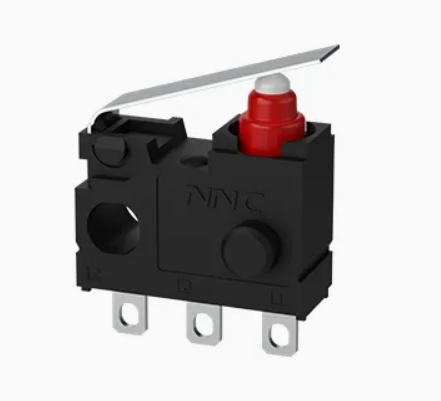
Moisture protection means nothing if the electrical core fails. Engineers must match internal contact materials precisely to the expected circuit load. Ignoring this principle guarantees premature failure.
Using the wrong contact material leads directly to arcing, welding, or severe oxidation. These issues cause the switch to fail functionally. The circuit breaks permanently, even if the waterproof seal remains perfectly intact.
Silver Alloys (AgNi, AgSnO2): These serve as the industry standard for power circuits carrying 5A to 16A. Silver features excellent conductivity. However, it remains highly prone to sulfidation and oxidation if used below its minimum current threshold.
Gold or Gold-Clad Contacts: These are absolutely mandatory for low-current, logic-level applications. Mechanical wiping actions often lack the physical force to break through dense silver oxide layers. Gold prevents this oxidation from forming entirely.
Specifying a waterproof 0 1a subminiature micro switch specifically requires gold-plated contacts. This requirement ensures reliable signal transmission in highly sensitive low-voltage scenarios. Common examples include automotive sensors, smart home logic boards, and precision medical devices.
"Over-speccing" a logic circuit with a high-current silver switch represents a very common engineering error. Designers assume a 16A switch will easily handle a 0.1A load. This assumption results in premature signal failure due to un-cleared oxidation building up on the silver contacts.
Translating material science into datasheet realities requires systematic evaluation. You must learn to read beyond top-line marketing claims.
Verify exactly how published waterproof micro switch specifications align against your actual use case. Look for granular data rather than broad assumptions.
Key Specs to Cross-Reference:
Mechanical life: The total number of physical actuation cycles before physical failure.
Electrical life: The total number of cycles achieved at the maximum rated load before connectivity drops.
Operating temperature: The certified thermal boundaries before internal materials begin degrading.
IP rating certification: The specific third-party verified ingress protection level.
Do not take "waterproof" at face value during procurement. Look for specifications detailing the exact testing parameters. A genuine IP67 rating should state clearly: "immersed in 1 meter of water for 30 minutes without ingress."
Check carefully for material compliance standards. RoHS and REACH certifications prove chemical safety. Look for UL/ENEC material flammability ratings. Standards like UL94V-0 confirm the plastic housing will self-extinguish rapidly during an electrical fire.
Common Mistakes in Specification Reading:
Confusing electrical life with mechanical life (electrical life is always shorter).
Assuming an IP67 rating allows for permanent underwater deployment.
Ignoring the actuation force requirements of the specific switch lever.
Component sourcing dictates the final reliability of your product. Navigating the global supply chain requires strict vetting procedures.
You must differentiate between commodity components and engineered solutions. Cheaper switches often compromise on critical hidden materials. They utilize inadequate gold plating thickness. Their epoxy quality fluctuates between batches. Many use recycled plastics that compromise thermal stability.
A reliable waterproof micro switch supplier will transparently provide comprehensive material data sheets (MDS). They will also readily supply third-party laboratory testing reports verifying their IP ratings.
Request random batch samples specifically for destructive testing.
Run components through thermal shock chambers to test seal elasticity.
Perform accelerated fluid immersion tests using your application's actual environmental chemicals.
Audit the supplier's manufacturing process directly or via video link.
Verify they use automated ultrasonic welding rather than manual gluing.
Investigate how their factory monitors and controls epoxy curing times.
Partnering with a premium manufacturer undeniably increases your upfront unit costs. However, this strategic decision drastically reduces downstream recall risks. It slashes warranty replacement expenses. High-quality components protect your brand reputation in the long run.
Material selection acts as the invisible architecture of micro switch reliability. Every material dictates a specific environmental and electrical threshold. PPS housings provide critical structural defense against extreme heat. Gold-clad contacts ensure flawless logic transmission in low-voltage scenarios. Epoxy bases firmly seal out destructive moisture at the wire junction.
Engineers and procurement teams must collaborate closely. Align your application's true operating environment—fluids, temperature extremes, and exact electrical loads—with specific metallurgical and chemical properties. Objective material verification ensures you finalize a robust Bill of Materials that withstands real-world conditions.
A: No. IP67 certification guarantees protection against temporary immersion (typically up to 1 meter for 30 minutes). For continuous underwater operation, an IP68-rated switch with specialized deep-water seals and specialized external cabling is required.
A: If the switch used standard silver contacts instead of gold, oxidation likely built up on the contact surface. Low-voltage/low-current circuits (like 0.1A) lack the electrical energy to "burn off" this oxidation, leading to a loss of continuity despite the waterproof housing remaining intact.
A: Yes. Pre-wired switches with factory-applied epoxy potting offer the highest reliability. Solder or quick-connect terminals exposed to the elements require secondary sealing (like heat shrink or external potting) by the end-user, introducing potential points of failure.
A: Extreme cold can cause standard rubber seals to become brittle and crack, while excessive heat can cause them to warp or lose elasticity. It is vital to match the manufacturer's specified operating temperature range with the actual environment to ensure seal longevity.

 注: 建议图片大小150px*50px


