Views: 0 Author: Site Editor Publish Time: 2025-12-01 Origin: Site


Have you ever wondered how certain systems react instantly when triggered? The key might lie in the snap action micro switch. Unlike regular switches that require continuous pressure, these switches change states quickly and precisely.
In this article, we will explore what makes the snap action micro switch unique and why it's ideal for applications requiring fast response times. You will learn how this electromechanical switch plays a crucial role in various industries, including household appliances, automotive systems, and industrial machinery.
A snap action micro switch is an electromechanical switch that provides a sharp and immediate change between contact positions. It is designed to operate with a spring-loaded actuator, which moves the contacts into an open or closed position when a specific force is applied to the actuator. This "snap" action ensures that the transition is clear and reliable, making the switch ideal for applications where precision and speed are essential. Whether used for safety mechanisms or rapid feedback systems, its fast and reliable switching action is unmatched.
Regular micro switches operate by moving contacts through a mechanical path, limiting their speed. In contrast, a snap action micro switch utilizes an internal spring mechanism that causes the contacts to instantly shift once a predetermined force is applied. This mechanism is what makes it more efficient in systems that require quick action, offering a faster and more reliable performance compared to traditional micro switches. The instantaneous switching action allows these devices to be highly effective in safety-critical applications and high-precision controls.
A snap action micro switch consists of several key components that work together to ensure its efficient operation:
Actuator: The part that gets manually or mechanically activated to trigger the switch. This can come in various forms such as a lever, plunger, or roller, depending on the application's requirements.
Spring Mechanism: This internal spring stores energy and releases it to quickly reverse the position of the contacts.
Contacts: These conductive parts open or close the circuit, allowing electricity to flow.
Terminals: These are the electrical connections that integrate the switch into the larger system.
Each of these parts plays a crucial role in ensuring that the switch operates efficiently with minimal wear and high reliability, making it ideal for high-speed and high-precision applications.
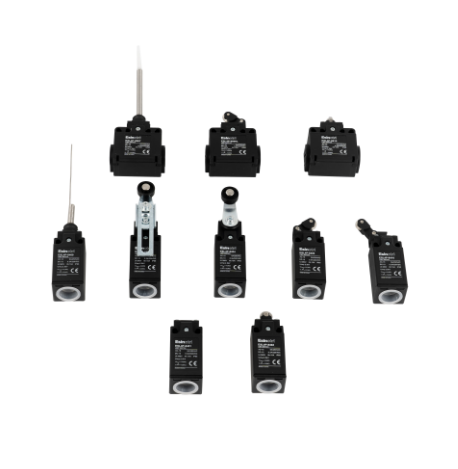
The operation of a snap action micro switch relies heavily on the energy stored within the spring mechanism. When an external force is applied to the actuator, it compresses the spring, storing energy. Once this energy reaches a critical point, the spring rapidly releases, causing the contacts to snap into their new positions. This instantaneous switching ensures the switch reacts significantly faster than regular mechanical switches, which rely on continuous movement of contacts to open or close a circuit. The fast action helps minimize delays and ensures that the system can operate with greater efficiency.
When comparing snap action micro switches to standard micro switches, the speed difference is clear. Regular switches rely on mechanical travel that limits their response times, while snap action switches offer near-instantaneous operation. This fast actuation makes the snap action switch ideal for applications that demand real-time response, such as safety systems, emergency cutoffs, or high-speed machinery. The immediate response of a snap action switch minimizes delays, ensuring greater system efficiency and reliability.
Thanks to the snap action mechanism, these switches provide a high level of precision when transitioning between on and off states. The rapid switching minimizes any jitter or bounce in the contact points, ensuring clear, stable feedback to control systems. This is particularly useful in applications where small errors or delays can have significant consequences, such as robotics or automated production lines.
The nature of the snap action mechanism reduces mechanical wear compared to traditional micro switches. Since the contact points do not move continuously along a path, they experience less friction and, as a result, have a longer lifespan. This extended service life is especially valuable in systems that require frequent actuation, such as industrial machinery, where the switch undergoes many cycles each day.
Snap action micro switches are designed to perform reliably in tough environments. Whether exposed to high humidity, extreme temperatures, or dust, these switches maintain their functionality, making them suitable for industries like automotive, aerospace, and industrial automation. Their ability to withstand harsh conditions without sacrificing performance ensures that critical systems remain operational over time.
Tip: When selecting a micro switch for high-reliability applications, consider a snap action switch, especially in environments where consistent performance is critical. The durability and resistance to wear make them a top choice for long-term use in demanding conditions.
Snap action micro switches are commonly found in household appliances, where they play a critical role in ensuring safety and efficiency:
Microwave Ovens: These switches prevent the microwave from turning on if the door is open, ensuring user safety by avoiding microwave radiation exposure.
Refrigerators: Snap action switches are used to regulate internal lighting and control temperature, ensuring proper operation when the door is closed.
Washing Machines: These switches lock the door during operation to prevent accidents, ensuring the machine only runs when securely closed.
In the automotive industry, snap action micro switches are integral to vehicle safety systems:
Door Locks: Detect whether the doors are closed and locked, preventing operation if not.
Brake Light Switches: Activates brake lights when the brake pedal is pressed, signaling to other drivers.
Seat Belt Detection: Ensures the seatbelt is fastened before allowing the car to operate, adding an additional layer of safety.
In industrial settings, snap action micro switches are essential for:
Limit Detection: Monitoring positions of robotic arms, conveyors, and other automated machinery.
Safety Mechanisms: Used to trigger emergency stops or detect critical positions in manufacturing lines, ensuring the smooth operation of machinery.
The versatility of snap action micro switches makes them a preferred choice in various sectors requiring rapid, reliable, and precise operation. They are especially valuable in systems requiring frequent, rapid actuation and precise control.
| Industry/Application Area | Example Uses |
|---|---|
| Household Appliances | Microwave ovens, refrigerators, washing machines |
| Automotive Systems | Door locks, brake light switches, seatbelt detection |
| Industrial Automation | Robotic arms, conveyor systems, manufacturing safety mechanisms |
Snap action micro switches come in different actuator styles, depending on the needs of the application:
Lever Actuators: Often used in applications requiring a mechanical trigger or manual operation, such as control panels.
Plunger Actuators: Common in push-button devices like elevators, doorbells, or control systems that require a simple press.
Roller Actuators: Ideal for systems requiring the switch to be triggered by a rolling motion, like conveyor belts or automated production lines.
| Actuator Style | Description | Common Use Cases |
|---|---|---|
| Lever | A simple mechanical trigger activated by a lever | Control panels, manual operation systems |
| Plunger | Activated by pressing a button or plunger | Elevators, doorbells, push-button devices |
| Roller | Triggered by a rolling motion along a surface | Conveyor belts, automated production lines |
SPDT (Single Pole Double Throw): A popular style with three terminals, enabling the switching between two circuits. Often used in simple applications like light switches or thermostats.
DPST (Double Pole Single Throw): This switch has four terminals, allowing for control over two separate circuits at the same time, ideal for applications like washing machines.
DPDT (Double Pole Double Throw): Offers six terminals for more complex switching tasks that need to control multiple circuits simultaneously. This type is commonly used in industrial machinery.
Snap Action Thermostats: Used for temperature-sensitive applications, such as controlling heating elements in ovens and water heaters. These switches activate or deactivate based on preset temperature thresholds.
Magnetic Snap Action Switches: These utilize a magnetic field to trigger the snap action, commonly used in security systems and proximity sensors.
Snap action micro switches offer a significantly faster response than regular micro switches. The key advantage is their instantaneous switching action, which makes them ideal for applications that require immediate response, such as safety shutdowns or rapid operational changes in automated systems.
Snap action micro switches feature a spring-loaded mechanism that enables fast switching, minimizing mechanical wear. Regular micro switches, by comparison, rely on continuous movement, which results in slower operation and higher wear. This makes snap action switches more durable in high-frequency applications, extending their lifespan.
Regular micro switches are suitable for simpler, low-speed applications. However, snap action micro switches excel in environments where speed, precision, and longevity are critical, such as in automotive safety systems, industrial machinery, and household appliances. Their ability to handle rapid cycles with high accuracy makes them indispensable in environments where precision is crucial.
Tip: For fast-response systems requiring high precision, opt for a snap action micro switch to ensure minimal delay and consistent operation. This choice will improve overall system efficiency and reliability.
| Feature | Snap Action Micro Switch | Regular Micro Switch |
|---|---|---|
| Switching Speed | Instantaneous response | Slower, dependent on mechanical travel |
| Structure | Spring-loaded mechanism | Mechanical contact movement |
| Durability | Higher durability, less wear | Prone to wear due to continuous movement |
| Use Cases | High-speed, precision applications | Low-speed, basic switching tasks |
| Typical Applications | Automotive, industrial, safety systems | Basic electronics, low-demand tasks |
When selecting a snap action micro switch, it’s essential to consider the materials used in its construction. Choose a switch made from durable, high-quality materials that can withstand harsh conditions, such as extreme temperatures, moisture, or exposure to dust and chemicals. A well-constructed switch ensures long-term reliability, reducing the need for frequent replacements and minimizing maintenance costs over time.
Ensure the micro switch is compatible with your system's electrical specifications. Pay close attention to the voltage, current, and frequency requirements of your application. A mismatch in electrical ratings can lead to performance issues, system failure, or premature wear of the switch. Selecting a switch that fits your system’s needs will provide consistent and reliable operation, preventing costly breakdowns.
The actuation force and travel distance are critical factors that influence the responsiveness of a snap action micro switch. For applications requiring quick switching, it is important to select a switch with a low actuation force and short travel distance. This reduces the time it takes for the switch to react, ensuring faster system performance and minimizing any delays in response time.
Although snap action micro switches tend to be more expensive than standard switches, their superior durability, speed, and reliability make them a worthwhile investment, particularly in precision applications. Their extended lifespan and lower maintenance needs often outweigh the higher initial cost. In the long run, these switches help reduce downtime, ensuring better system efficiency and overall cost savings.
Snap action micro switches are essential for systems that require rapid, reliable, and precise switching. These switches excel in demanding applications, from automotive safety to industrial automation. Their unmatched speed and dependability make them the ideal choice for high-speed, high-precision systems. By offering superior performance, snap action micro switches ensure the safety and efficiency of critical systems. For reliable, high-quality switches, Clion Electric offers products that meet these needs, providing unmatched value and long-term performance in precision applications.
A: A snap action micro switch is an electromechanical switch that provides rapid and precise switching between "on" and "off" states using a spring-loaded mechanism. It reacts instantly when a threshold force is applied.
A: The snap action mechanism uses stored energy in a spring to quickly reverse the switch's contacts. Once the actuation force reaches a critical point, the spring releases, causing an immediate change in the circuit.
A: Snap action micro switches offer faster response times, increased durability, and high precision. Their reliable performance makes them ideal for applications requiring quick feedback and minimal delay.
A: These switches are commonly used in household appliances, automotive systems, and industrial automation, where precise, rapid switching is required for safety and control.
A: While they are more expensive, snap action micro switches offer superior speed, durability, and reliability, making them a valuable investment in high-precision and high-speed applications.

 注: 建议图片大小150px*50px


