Views: 149 Author: Site Editor Publish Time: 2026-07-13 Origin: Site


Selecting the wrong component for a compact control panel setup does not just cause assembly delays. It risks thermal failure, arc faults, and severe non-compliance in industrial operations. You might assume identical pin counts guarantee seamless interlocking. They do not. While switching devices look highly standardized, socket tolerances vary drastically across the market. Terminal designs and material ratings differ significantly between manufacturers.
If you mismatch these connections, you compromise panel safety and operational uptime. This guide breaks down the exact electrical, mechanical, and environmental criteria required to evaluate compatibility. We show you how to match a relay socket for miniature relay integrations flawlessly. You will learn to verify current capacities, specify correct mounting styles, and select the right terminal technologies. Applying these rules ensures long-term reliability in your control systems.
Pin Configuration is Only Step One: Blade size, pitch, and pole count must align, but thermal derating and dielectric strength dictate actual compatibility.
Current Ratings Must Exceed the Load: A 16A miniature power relay requires a 16A relay socket (or higher) to prevent terminal degradation under continuous load.
Mounting Dictates Maintenance Speed: The choice between DIN-rail plug-in relay sockets and PCB-mounted bases impacts future replacement and troubleshooting times.
Terminal Technology Reduces Failure Rates: Push-in terminals offer superior vibration resistance over traditional screw terminals in heavy industrial environments.
Engineers often face pressure to assemble control panels quickly. This rush leads to serious component compatibility errors. Understanding the mechanical consequences of poor pairing prevents costly system failures.
Many technicians fall into the trap of assuming universal compatibility. They believe matching pin layouts guarantee safe operation across different brands. This is a dangerous misconception. You might plug a device into a random relay base just because it fits. However, blade thickness and contact tension vary by fractions of a millimeter. Loose connections reduce the physical contact area. This poor mating tension directly causes micro-arcing. Over time, micro-arcing destroys the terminal plating and compromises the entire circuit.
Substandard materials create distinct localized heating problems. When you pair a high-quality switching unit with a low-grade base, the base becomes a bottleneck. The inferior metal inside the base resists electrical flow. Resistance generates heat during continuous operation. This thermal accumulation bakes the surrounding plastics. It degrades the lifespan of both components rapidly. Furthermore, melting plastics can void your expensive UL/IEC panel certifications instantly.
Industrial environments punish control cabinets. Heavy machinery produces constant, low-frequency vibrations. If your socket lacks adequate retaining clips, these vibrations slowly unseat the plug-in components. Unplanned downtime costs manufacturing facilities thousands of dollars per minute. Framing your component choice around mechanical security prevents these sudden disconnections.
Common Mistakes:
Ignoring micro-tolerances between different component brands.
Assuming an 8A load makes a 10A base acceptable for a 16A device.
Forgetting to install retaining clips in high-vibration zones.
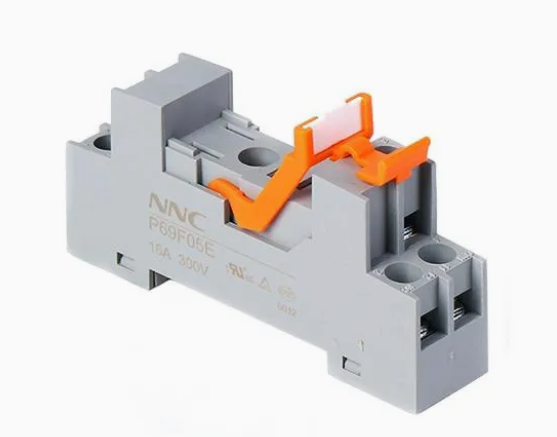
Selecting the appropriate base requires a methodical evaluation. You must align three distinct engineering dimensions to ensure safe operation.
Matching voltage and current capacity is non-negotiable. The base must handle the maximum fault current of the system, not just the nominal load. Specifying a 16A relay socket is absolutely critical when deploying high-capacity miniature devices. If you downgrade the base rating, the internal bus bars will overheat.
You must also verify dielectric strength. This metric defines the maximum voltage the plastic housing can withstand before breaking down. Check the coil-to-contact isolation voltage. Then, verify the pole-to-pole isolation. High dielectric strength prevents dangerous cross-circuit arcing during power surges.
Physical form factors dictate immediate compatibility. You must evaluate blade-style configurations against round-pin setups. Blade-style terminals typically pair with Omron MY/LY series equivalents. Round-pin configurations dominate older, heavy-duty industrial timers. Next, match the pole count precisely. Ensure single-pole (SPDT), double-pole (DPDT), or four-pole (4PDT) setups align. Finally, check the pitch spacing tolerances carefully to avoid bending pins during insertion.
Industrial components demand rigorous safety certifications. Look for independent approvals on the base itself. It should carry its own UL508, CE, or CSA markings. Never assume the certification of the upper device covers the lower base. Evaluate flammability ratings strictly. Use UL94 V-0 rated plastics for industrial control environments. These plastics self-extinguish within ten seconds, stopping cabinet fires from spreading.
Evaluation Dimension | Key Parameter | Engineering Standard |
|---|---|---|
Electrical Capacity | Current & Dielectric Strength | Match or exceed 16A limit; >2000V AC isolation |
Mechanical Layout | Pin Style & Pitch | Blade vs. Round Pin; Exact mm pitch matching |
Material Safety | Flammability Rating | UL94 V-0 (Self-extinguishing) |
Engineers mount devices differently based on spatial constraints and maintenance requirements. You must select a mounting style suited to your specific deployment environment.
These modular units slide directly onto standard 35mm metal rails. They represent the industry standard for control panels and automation cabinets. A quality plug-in relay socket designed for DIN-rails allows rapid field replacement. When evaluating these models, test the rail grip strength. Weak grips cause units to slide sideways during wiring. Evaluate the width footprint to save horizontal panel space. Finally, analyze the wire routing logic. The best designs physically separate coil input terminals from high-voltage load terminals.
Engineers specify PCB mounts for mass-produced OEM electronics and compact motor controllers. These units solder directly onto circuit boards. Evaluation criteria shift heavily toward manufacturing realities here. You must confirm wave soldering heat resistance. The plastic cannot warp during the factory soldering process. Measure the standoff height carefully. Proper standoff gaps allow chemical flux washing underneath the housing. Footprint optimization remains vital for shrinking board sizes.
Some environments render standard DIN rails useless. Heavy transit applications and automotive bays experience extreme, multi-axis shaking. Panel mount bases screw directly into the metal chassis. They offer unparalleled mechanical rigidity. When sourcing these, evaluate the flange durability. Thin plastic flanges crack under screw torque. Verify screw-hole mounting tolerances to ensure alignment with pre-drilled chassis plates.
Mounting Category | Best Application Environment | Primary Selection Criteria |
|---|---|---|
DIN-Rail Mount | Industrial Control Panels | Rail grip strength, wiring separation |
PCB Mount | Mass-produced OEM Boards | Wave solder resistance, standoff height |
Chassis Mount | Heavy Transit / Automotive | Flange thickness, screw-hole durability |
Your component choice impacts the electricians assembling the final product. Terminal designs and accessories dictate how fast teams build and maintain the panel.
Wiring interface types define the long-term reliability of your cabinet. You face two primary choices:
Screw Terminals: These remain the traditional, cost-effective standard. They accept a wide variety of wire gauges easily. However, they remain highly susceptible to loosening. Thermal cycling and machine vibration back the screws out over time. They require routine torque maintenance programs to prevent arc faults.
Push-In Plus / Spring-Clamp Terminals: These modern designs slash installation time drastically. They provide a continuous, vibration-proof connection. The internal spring maintains constant tension regardless of temperature changes. However, they require strict adherence to wire gauge (AWG) limits. Electricians must crimp ferrules onto stranded wires before insertion.
Bare bases rarely operate alone in professional environments. You need supplementary accessories to build a robust system. Let us examine the vital additions for a miniature power relay deployment.
Retaining Clips / Ejector Levers: These are absolutely mandatory. They secure the upper unit firmly. You need them when mounting panels in inverted positions or high-vibration zones. Ejector levers also protect technicians' fingers during maintenance.
Protection Modules: Coil switching generates damaging voltage spikes. You need space to install plug-in varistors, RC circuits, or flyback diodes. These small modules absorb transient voltages and protect sensitive PLC outputs.
Marker Tags: Large-scale panels look like confusing mazes without proper labeling. Snap-in marker tags provide critical organization. They ensure a safe, efficient user experience during emergency troubleshooting.
Best Practices for Wiring: Always route low-voltage coil wires away from high-voltage load wires. Use logical isolation bases to force this separation physically. Strip wire insulation precisely to avoid exposing bare copper outside the terminal block.
Moving from technical theory to purchasing requires disciplined procurement logic. Follow these steps to finalize your Bill of Materials (BOM) confidently.
Never guess compatibility. Always open the manufacturer’s datasheet. Locate the "Recommended Sockets" section. Manufacturers engineer these paired components simultaneously. Using the exact same brand for both halves guarantees precise contact tension. It also protects your warranty coverage. If a mismatched unit fails, the manufacturer will void your warranty claim instantly.
Supply chain shortages sometimes force you to mix brands. When you must pivot, act like an auditor. Verify the exact pin dimensions in millimeters. Check blade thickness and width strictly. Investigate the contact material compatibility. Avoid mating tin-plated pins with bare brass receptacles, as galvanic corrosion will ruin the connection. Researching these physical dimensions prevents catastrophic operational failures.
Do not order thousands of units blindly. Request engineering samples from your distributor first. Once they arrive, test the physical mating force. A good industrial relay socket requires firm, deliberate pressure to seat the device. Evaluate the wire insertion feel. Give the samples to your assembly technicians. Ask them if the terminal screws strip easily. Ask if the push-in springs grab the ferrules securely. Physical validation always trumps paper specifications.
Matching a mounting base for your switching device represents a critical engineering decision. It involves rigorous thermal management, mechanical stability, and panel longevity planning. You cannot treat these bases as generic commodities. Tolerances, flammability ratings, and terminal designs dictate the safety of your entire electrical system.
Prioritize certified components carrying UL and CE markings. Match your electrical current ratings perfectly to handle fault conditions safely. Consider assembly efficiency by adopting push-in terminals and proper retaining clips. When you finalize your Bill of Materials, review datasheets meticulously. Request physical samples to test mating force before bulk ordering. Following these steps guarantees a robust, reliable, and maintenance-friendly control panel.
A: Technically it may function, but it violates electrical design best practices and may fail panel inspections. Always match or exceed the relay's maximum rating to ensure the socket's internal bus bars can handle sudden fault currents.
A: No. Even if the pin count matches perfectly, blade thickness, pitch spacing, and locking mechanisms vary greatly between manufacturers. Always verify dimensional drawings in the technical datasheets before pairing components.
A: Clips prevent the relay from unseating due to mechanical vibration, shipping impact, or thermal expansion. They guarantee consistent electrical contact and prevent localized heating or sudden operational downtime.
A: Logical isolation sockets physically separate the coil input terminals from the high-voltage load terminals. This design dramatically improves safety, increases dielectric strength, and creates cleaner wiring organization inside the control panel.

 注: 建议图片大小150px*50px


