Views: 148 Author: Site Editor Publish Time: 2026-04-10 Origin: Site


A solid-state relay (SSR) is an advanced type of relay that uses semiconductor components to switch electrical circuits, eliminating the need for mechanical moving parts. Unlike traditional electromechanical relays, SSRs offer faster switching speeds, longer lifespans, quieter operation, and greater reliability. These relays are widely used in both industrial and consumer applications to control high-power devices, such as motors, heating elements, and lighting systems, with minimal wear and tear. Understanding the capability of SSRs to handle both AC (alternating current) and DC (direct current) loads is crucial because different loads require specific designs and considerations for efficient switching. Recognizing how SSRs operate in both AC and DC systems helps ensure the correct relay type is selected for various applications, optimizing performance and safety across diverse industries.
A solid-state relay (SSR) is an electronic switch that uses semiconductor components, such as transistors or thyristors, to control electrical circuits without moving parts. When a small control signal is applied, the SSR activates the semiconductor, allowing current to flow. SSRs are commonly used for fast, reliable, and quiet switching in industrial and consumer applications.
Switching Mechanism:
SSRs use electronic components to switch circuits, while electromechanical relays (EMRs) rely on an electromagnet to move contacts.
Durability:
SSRs last longer due to no mechanical parts, whereas EMRs wear out over time with repeated mechanical movement.
Speed:
SSRs can switch faster than EMRs, making them ideal for high-speed applications.
Noise:
SSRs operate silently, while EMRs produce a "click" during switching.
Size and Weight:
SSRs are smaller and lighter compared to EMRs, which are bulkier due to their mechanical parts.
Longer Lifespan:
SSRs have no mechanical parts, resulting in fewer failures and a longer lifespan compared to EMRs.
Faster Switching:
SSRs offer rapid switching, making them suitable for high-speed applications.
Quieter Operation:
SSRs operate silently, ideal for noise-sensitive environments.
Energy Efficiency:
SSRs are more energy-efficient and generate less heat than EMRs.
Reliability:
SSRs are more reliable in harsh environments due to fewer moving parts.
Solid-state relays (SSRs) are versatile devices that can handle both AC (alternating current) and DC (direct current) loads. However, the design and operation of SSRs for AC and DC applications are distinct due to the different characteristics of AC and DC circuits. Below is an explanation of how SSRs are designed for each load type, and the challenges associated with switching AC versus DC.
How SSRs Handle AC Loads:
SSRs designed for AC loads typically use components like triacs or thyristors. These semiconductor devices allow current to flow in both directions, which is essential for AC circuits. The SSRs detect the zero-crossing point of the AC waveform to turn the relay on and off, ensuring smooth switching with minimal power loss and avoiding inrush currents.
Common Applications in AC Systems:
SSRs are widely used to control high-power devices in AC-powered systems, including:
HVAC systems: Controlling air conditioning compressors and fans.
Lighting control: Regulating the on/off state of large lighting systems.
Heaters: Managing the power to heating elements.
Motors: For controlling motor start/stop operations.
How SSRs Control DC Circuits:
SSRs for DC applications use MOSFETs or IGBTs (Insulated-Gate Bipolar Transistors) to switch DC loads. Unlike AC, DC flows in one direction, so these relays are designed to handle continuous current in a single direction. In DC circuits, SSRs must be able to manage the inherent challenges of switching DC, such as avoiding arcing when the circuit is broken.
Why Specific SSRs are Required for DC Loads:
DC loads present a challenge because the current doesn’t naturally fall to zero like in AC systems. When switching off a DC circuit, the current can cause arcing across the switch contacts, which could damage the SSR over time. Therefore, DC-rated SSRs are built with higher voltage and current ratings to handle these stresses. Additionally, specialized components like snubber circuits are often used to suppress voltage spikes when switching DC loads.
Voltage and Current Differences:
AC Circuits: In AC circuits, the voltage and current alternate direction, and naturally drop to zero at the end of each cycle. This makes switching AC loads less stressful for relays, as the current naturally "zeroes out" when the switch is opened.
DC Circuits: In DC circuits, the current flows in one direction, and it doesn’t naturally drop to zero. This makes it harder to break the circuit without causing damage. The SSRs for DC switching must handle continuous current and voltage spikes, which are more challenging than in AC circuits.
Switching Mechanisms:
AC Switching: SSRs for AC circuits typically use triac-based switching, which allows them to switch in both directions and benefit from zero-crossing detection to reduce switching noise and wear on the components.
DC Switching: SSRs for DC circuits require MOSFETs or IGBTs, which are specifically designed to handle the unidirectional current flow and high switching speeds of DC circuits.
Heat Dissipation:
DC SSRs can generate more heat than AC SSRs because of the higher continuous current they manage. Proper heat sinking and thermal management are essential to ensure efficient operation in DC applications.
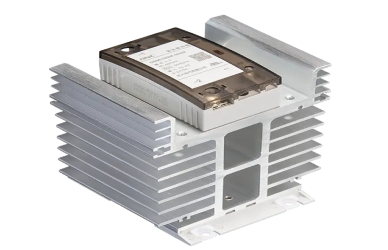
Solid State Relays (SSRs) are widely used in both AC and DC circuits due to their fast, reliable switching, durability, and efficiency. Below are key applications in each type of circuit:
HVAC Systems:
SSRs control compressors, fans, and pumps in HVAC systems, providing smooth, reliable switching for temperature and airflow regulation.
Lighting Control:
Used in commercial and industrial lighting systems, SSRs efficiently switch high-current lighting circuits, and are also suitable for dimming applications.
Heating Elements:
SSRs are used to control electric heating elements in water heaters, ovens, and industrial heaters, ensuring precise temperature control with silent operation.
Solar Power Systems:
SSRs manage the switching of solar panels, inverters, and batteries, making them ideal for controlling DC loads in renewable energy systems.
Battery-Operated Devices:
In battery-powered devices like electric vehicles and portable power supplies, SSRs ensure efficient power distribution and safe operation.
Automotive Circuits:
SSRs are used in electric vehicle systems for controlling lights, motors, and fans, offering durability and high reliability for automotive applications.
Selecting the right Solid State Relay (SSR) ensures safe, efficient, and reliable operation in AC or DC circuits. Here’s a guide on the key factors to consider:
Current Ratings:
Choose an SSR with a current rating that exceeds the maximum load current to prevent overheating and ensure safety.
Voltage Rating:
Ensure the SSR’s voltage rating matches or exceeds the circuit's operating voltage.
Load Type (AC or DC):
SSRs for AC circuits typically use triacs or thyristors, while MOSFETs or IGBTs are used for DC circuits, which require specialized components for efficient switching.
Switching Speed:
Select an SSR with the appropriate switching speed based on your application, such as fast switching for motor control or lighting.
Heat Dissipation:
SSRs handling high currents need adequate heat sinking to prevent overheating and ensure long-term reliability.
DC circuits are more challenging for SSRs because the current flows continuously, unlike AC. This increases the risk of arcing when switching. Specialized SSRs for DC loads are designed with MOSFETs or IGBTs, and often include snubber circuits to protect against voltage spikes and ensure safe switching.
No, a single SSR is typically designed for either AC or DC circuits, but not both simultaneously. Specialized relays are needed for each type.
Yes, SSRs for DC circuits often have additional features like reverse current protection, while AC SSRs may include zero-crossing detection.
Yes, SSRs are available with high-voltage ratings for controlling systems such as industrial heating elements or high-power motors.
Yes, SSRs are generally more efficient for DC loads as they don’t have the mechanical wear and tear associated with electromechanical relays, offering faster and more reliable switching.
Solid State Relays (SSRs) offer exceptional versatility in switching both AC and DC loads, making them suitable for a wide range of applications, from industrial systems to consumer electronics. While SSRs for AC circuits typically use triacs or thyristors to manage alternating current, SSRs for DC circuits require specialized components like MOSFETs or IGBTs to handle continuous current and avoid issues like arcing. Selecting the right SSR based on the specific application—considering factors like current, voltage, and load type—is essential for ensuring optimal performance, safety, and longevity of the system. Choosing the appropriate SSR ensures reliable operation, efficient power distribution, and protection of electrical components, enhancing the overall performance of your circuits.

 注: 建议图片大小150px*50px


