Views: 137 Author: Site Editor Publish Time: 2026-07-17 Origin: Site


Selecting the wrong vehicle relay compromises system reliability. We often see builders install standard relays on heavy-duty cooling fans. This common mistake quickly leads to welded contacts and severe electrical fires. Conversely, over-speccing relays across your entire build needlessly increases wiring complexity. It also inflates your component footprint and wastes project budget. Automotive electrical loads rarely stay static during operation. You must carefully evaluate the difference between continuous operating current and transient inrush current. This critical evaluation ensures long-term electrical reliability. We created this comprehensive guide to establish a clear engineering framework. You will learn exactly how to choose between standard 35A and heavy-duty 70A units. We base these choices on specific load types, engine bay conditions, and wiring infrastructure. By accurately matching relay capacity to your accessory loads, you prevent dangerous system failures. You also ensure optimal power delivery across your entire vehicle network.
The 80% Rule: Continuous loads should not exceed 80% of a relay’s maximum rating to account for thermal degradation (e.g., a 35A relay safely sustains ~28A continuously).
Load Profiles Matter: Resistive loads (lights) require different capacity planning than highly inductive loads (motors, fans) which generate massive inrush spikes.
Form Factor Constraints: Upgrading to a 70A relay usually requires transitioning from standard ISO 5-pin micro/mini footprints to larger Maxi relay sockets with heavier gauge wire terminals.
Environmental Protection: High current applications run hotter; utilizing a dust proof relay or fully sealed enclosure prevents premature contact failure from debris and engine bay contamination.
Engineers evaluate automotive relay switching capacity by analyzing two distinct electrical metrics. First, we look at continuous steady-state current. Second, we measure the transient inrush current. Continuous current represents the normal operating state of your accessory once it stabilizes. Inrush current measures the massive initial energy surge required when you first power on a device. For example, large electric motors can pull three to five times their rated continuous current during startup. A fan that runs at 20 amps might spike to 60 amps for a fraction of a second. If your relay cannot handle that brief surge, the contacts will arc.
Next, we must consider the critical role of voltage drop. Manufacturers typically test and rate vehicle relays at an optimal 14V DC. This voltage mirrors a healthy, active alternator charging state. However, standard vehicle batteries rest at 12.6V DC. Furthermore, long wire runs naturally cause voltage to drop. If your system voltage drops to 11V at the accessory, the total amperage must increase to deliver the same required wattage. This practical fluctuation drastically impacts actual relay performance and heat generation.
Finally, engine bay ambient temperature forces necessary thermal derating. An engine bay gets incredibly hot during normal driving. High ambient heat severely reduces the effective maximum switching limit of any electrical component. A relay rated for 35 amps at room temperature simply cannot sustain that load near a hot exhaust manifold. Thermal derating charts typically show a steep drop-off in capacity once ambient temperatures exceed 85°C (185°F). You must account for this heat when planning your circuit layout.
The 35A automotive relay remains the absolute standard workhorse for modern 12V electrical systems. It provides an excellent balance between physical footprint and practical switching power.
Primary use cases focus heavily on resistive loads and low-to-medium inductive loads. We highly recommend these units for LED light bars, standard vehicle horns, and basic inline fuel pumps. They also handle most low-draw auxiliary power circuits perfectly. Because these accessories do not generate massive voltage spikes, a 35A capacity provides plenty of safe overhead.
System integration remains incredibly straightforward with these units. They easily fit into standard ISO micro or mini relay sockets. This universal fitment allows builders to source modular fuse boxes easily. You can wire them effectively using standard 10 to 12 AWG automotive wire. This makes integration clean, simple, and highly compatible with factory wiring harnesses.
However, pushing a standard relay past its engineered limits introduces severe failure risks. When builders ignore the math, components break down quickly.
Contact Pitting: Repeated high-current arcing slowly vaporizes and damages the internal metal contacts.
Coil Failure: Overheating the main circuit can transfer heat and burn out the delicate electromagnetic coil.
Melted Housings: Sustained electrical overload easily melts standard plastic relay housings, exposing live wires.
Welded Contacts: A massive surge can literally melt the contacts together, causing the accessory to stay powered permanently.
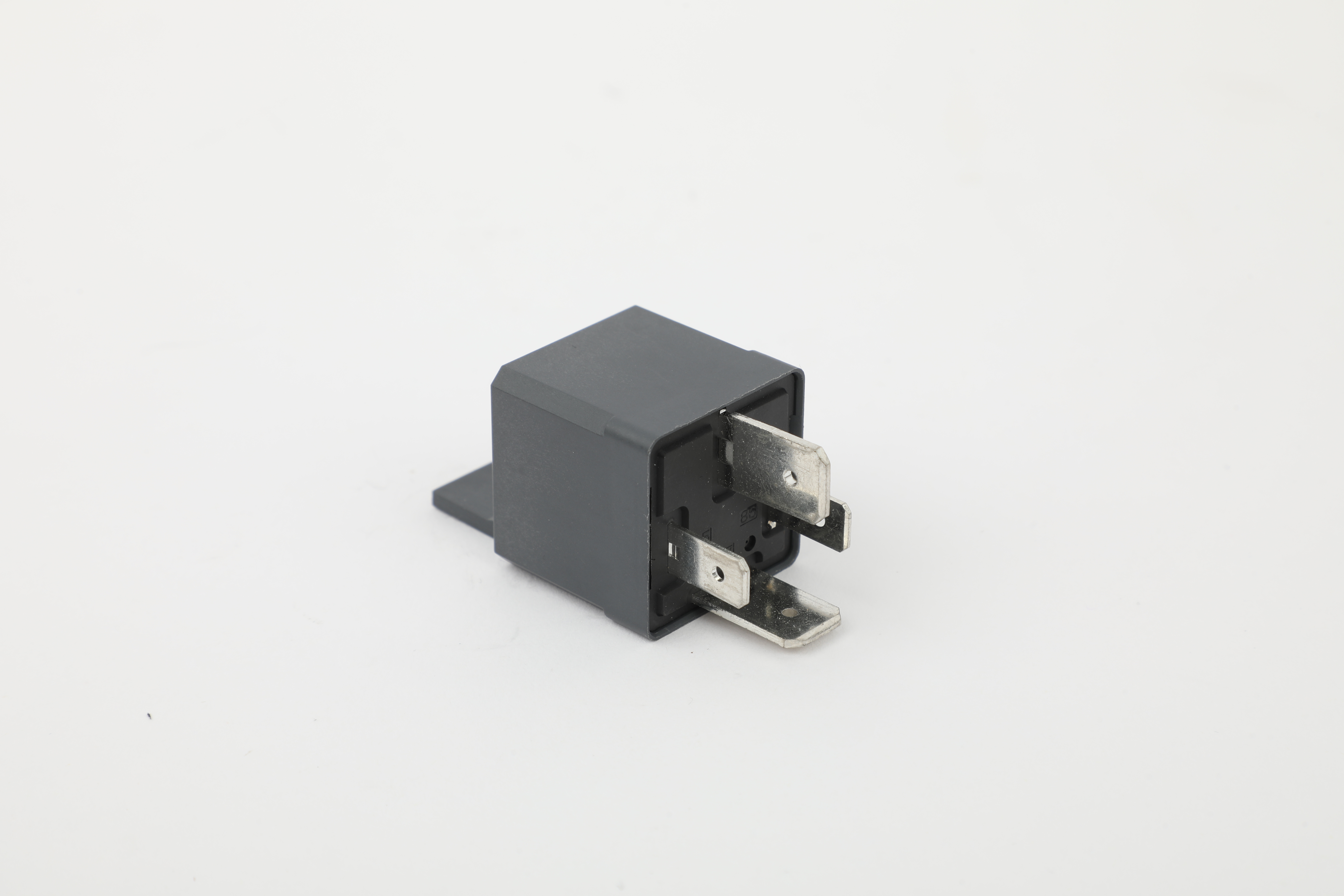
Sometimes, standard components simply cannot survive the electrical demands of serious off-road or performance equipment. You need a dedicated heavy-duty relay for high-stress applications.
Primary use cases include large components with massive inductive inrush spikes. Dual electric radiator fans, heavy off-road winches, and onboard air compressors absolutely require a 70A automotive relay. Heavy hydraulic pumps for suspension systems or dump beds also demand much higher switching capacities to operate reliably.
Structural differences justify the physical size increase of a true high current auto relay. These units feature much larger internal silver contact pads to disperse heat. They utilize significantly stronger return springs. These stiff springs forcibly snap the heavy contacts apart to prevent dangerous welding during high-surge disconnects. Furthermore, they use much wider terminal blades. These large blades handle massive current flow without overheating at the socket connection point.
Wiring prerequisites change drastically at this extreme power level. You cannot use standard thin wire safely. A 70A load demands heavily upgraded infrastructure. We typically specify thick 6 to 8 AWG pure copper wire. You also need heavy-duty Maxi-style relay blocks to accept the wider terminals. Emphasize this rule: if you upgrade the relay but ignore the wiring, the wire itself turns into a dangerous, uncontrolled fuse.
Understanding the deep differences between load types dictates your final component choice. A 20A continuous motor might generate a 60A transient inrush spike when starting. This massive spike requires a 70A relay for safety. Conversely, a 20A resistive light bar creates zero inrush surge. Therefore, it works perfectly fine on a standard 35A unit.
Load Matrix: Matching Load Profiles to Relay Capacity | ||||
Load Classification | Common Example Component | Typical Continuous Draw | Peak Inrush Spike | Recommended Relay Capacity |
|---|---|---|---|---|
Resistive Load | Large LED Light Bar | 15 Amps | 15 Amps (No Surge) | 35A ISO Mini |
Resistive Load | Heated Seat Elements | 25 Amps | 25 Amps (No Surge) | 35A ISO Mini |
Low Inductive Load | Standard EFI Fuel Pump | 12 Amps | 25A - 30A | 35A ISO Mini |
High Inductive Load | Electric Radiator Fan | 25 Amps | 65A - 75A | 70A Maxi Form Factor |
Extreme Inductive | Onboard Air Compressor | 35 Amps | 80A+ | 70A Maxi Form Factor |
Installation physical space heavily dictates practical harness design. Standard ISO micro and mini blocks measure roughly one square inch in size. They fit neatly into tight motorcycle frames, crowded modern engine bays, or under dashboards. Maxi relay blocks command significantly more real estate. They feature much taller profiles and wider mounting bases. You must plan your mounting locations carefully when stepping up to larger components. Sometimes, builders must fabricate custom mounting brackets to accommodate these larger high-capacity fuse boxes.
Every professional builder must balance initial component pricing against long-term failure risks. Standard 35A relays cost very little to produce or replace. High-capacity 70A units cost more initially. However, the real expense lies in the thicker copper wire and larger specialized sockets. You must weigh these upfront component expenses against the immense downtime risk. Replacing a blown vehicle relay on a dark, remote trail is highly frustrating. A melted fuse box causing an engine bay fire is a costly disaster. Investing in the proper high-capacity components upfront ensures totally reliable operation under extreme stress.
Amperage capacity alone does not guarantee system reliability. Environmental hazards easily destroy otherwise perfectly specified unprotected electrical components.
Ingress protection plays a massive role in electrical longevity. We consider a dust proof relay completely non-negotiable for exposed chassis mounting. If you mount electrical components on an off-road chassis, near wheel wells, or on a marine bulkhead, you absolutely need IP54 to IP67 protection ratings. These heavy rubber seals prevent water, abrasive mud, and fine dust from corroding the internal copper and silver contacts.
Vibration resistance also separates cheap aftermarket units from professional-grade hardware. High-current 70A relays naturally contain heavier internal contact masses. This extra mass can bounce open during extreme off-road driving or heavy washboard roads. Manufacturers design premium heavy-duty units with high-tension coil springs. These internal springs resist high-vibration environments far better than standard, lightweight 35A units.
Finally, you must critically evaluate the quality indicators on the manufacturer datasheet before purchasing.
Contact Material Composition: Always look for Silver Tin Oxide (AgSnO2) contacts. They resist high-current arc welding much better than basic, cheap silver alloys.
Electrical Lifespan Rating: High-quality relays should comfortably survive over 100,000 electrical switching cycles at full rated load.
Mechanical Lifespan Rating: The internal physical moving parts should easily endure 1,000,000+ operations without an active load applied.
Choosing the proper relay capacity safely prevents catastrophic automotive electrical failures. Our final engineering decision logic remains straightforward. Default to a standard 35A relay for standard LED lighting and low-draw interior accessories. This conservative strategy saves vital installation space and upfront wiring cost. However, you must explicitly mandate a heavy-duty 70A relay for primary cooling fans, winches, and high-surge electric motors.
Take these specific action-oriented next steps before buying your harness components:
Calculate the exact peak inrush current of your specific accessory circuit using an ammeter.
Verify that your selected wire gauge safely supports that peak transient current without melting.
Select an appropriately sealed relay housing based on your specific environmental mounting location.
Confirm your vehicle's alternator can safely support the total combined continuous load.
By strictly following these professional steps, you will successfully build a rugged wiring harness that easily survives the harshest driving conditions.
A: No. 70A relays typically use a "Maxi" footprint with larger 3/8" (9.5mm) terminal blades, which physically will not fit a standard ISO micro/mini socket. Attempting to force them will break the socket. You must upgrade the entire relay block and wiring harness to accommodate the larger blades and higher current flow safely.
A: The coil draw (the power needed to keep the relay closed) is marginally higher on a 70A relay, but the difference is negligible. The battery drain depends entirely on the accessory connected to the load side. Upgrading the relay simply allows current to pass more safely; it does not force the accessory to consume more total power from your battery.
A: The internal contacts will overheat, potentially welding shut (causing the accessory to stay on permanently) or melting the housing, creating a severe fire hazard. The standard internal wiring and thin terminal blades cannot dissipate the excess heat generated by the high-current draw, leading to rapid, catastrophic component failure.

 注: 建议图片大小150px*50px


